
Does castor oil make your hair grow?
You can spot a glossy strand immediately. To tell whether more hair is growing, you need to look at the very same spot months later. What do castor oil studies show?
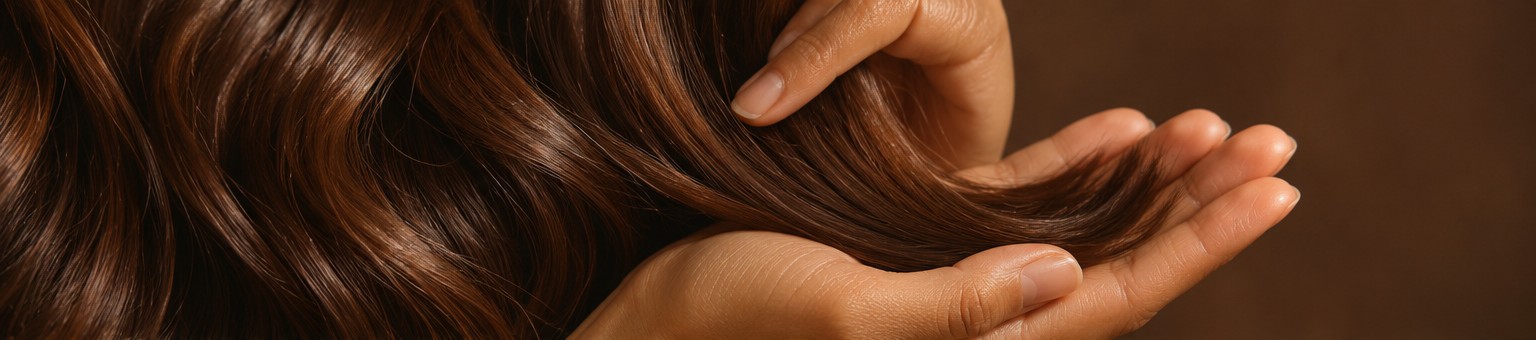
Look up castor oil for thinning hair and you’ll soon find pictures of glossy lengths and fuller-looking partings. These are two different things to investigate. The evidence for pure castor oil as a scalp hair growth treatment is unconvincing in humans. There is limited evidence for shine. Why does that difference matter when choosing a bottle? [1]
What can a single strand tell you?
Tuck a strand behind your ear and tilt your head towards a window. The highlight moves although the number of hairs stays the same. Shine comes from light reflected by the fibres. Growth takes place in follicles in the scalp. A visible change in the hair shaft tells you little about the root. [1], [2]
Even length is tricky. If your ends break less often, they may be longer after a few months at exactly the same growth rate. A photo of longer ends can’t establish faster growth. Whether castor oil actually reduces breakage is another research question.
What did the systematic review find?
Phong and colleagues included 22 publications covering coconut, castor and argan oils together. For each oil they examined growth and other outcomes, including existing hair quality. For castor oil they found weak evidence for increased shine and no strong support for growth. The total number of papers tells you little about one ingredient if it covers only part of the review. [1]
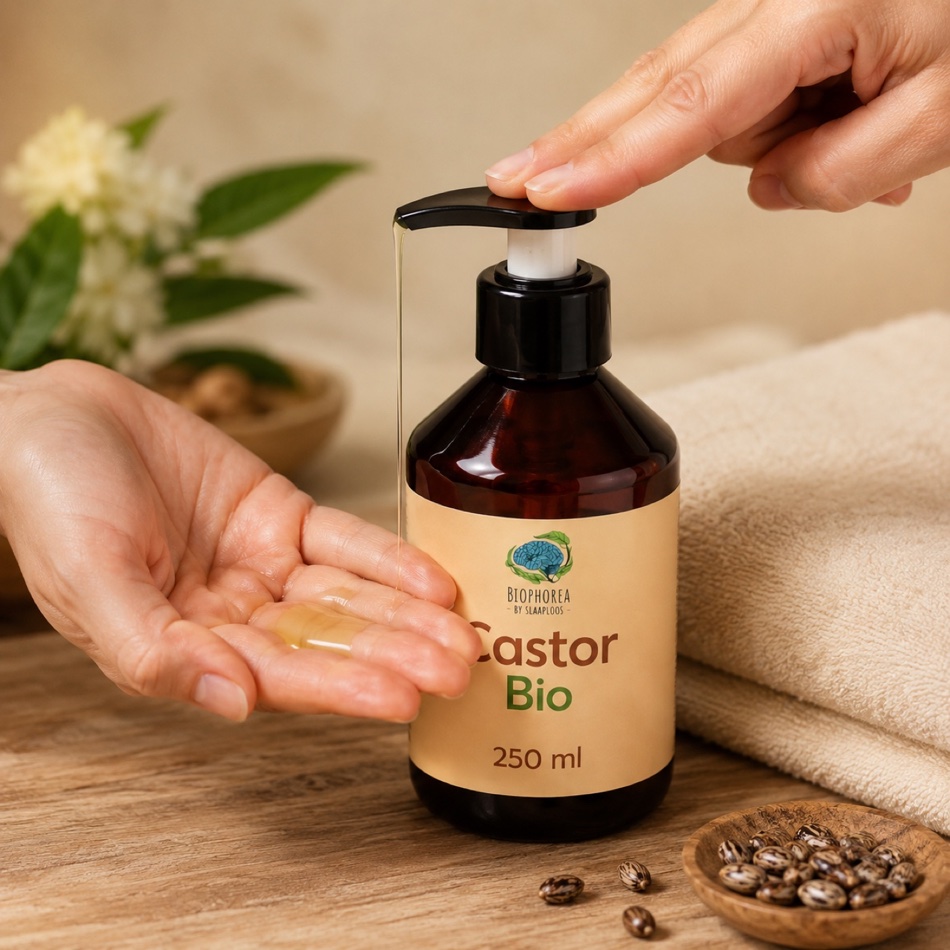
What about the rosemary and castor oil trial?
A 2025 randomised, double-blind trial ran for 90 days. Participants used a rosemary and castor oil preparation, a rosemary and lavender preparation, or coconut oil. The researchers measured hair density among other outcomes and reported improvements in the rosemary groups. The company behind the product funded the study. [3]
No group used castor oil alone, and the trial did not compare two otherwise identical preparations differing only in castor oil. The measured changes therefore cannot be attributed to castor oil. Quoting a percentage from this trial on a bottle of pure oil would imply a result the researchers never tested. [3]
How the same study appears in several articles
Rosemary, coconut oil and a 90-day trial are clues that several articles cite the same publication. It is fair to say castor oil’s individual effect remains uncertain. Saying it works better with rosemary than without goes beyond what the trial tested. Count the independent studies behind the articles. [3]
Another source concerns ricinoleic acid. In 2015 researchers modelled whether plant compounds could bind to an enzyme involved in making prostaglandin D2. Ricinoleic acid was a candidate for further study. Nobody applied castor oil to anyone’s scalp, and no hairs were counted. Binding was predicted. Hair growth in people would need to be measured. [4]
Three questions about before-and-after photos
- What exactly did the person use? Check the ingredients and what the product was compared with.
- What was measured? Rating shine, counting hairs on a fixed patch of scalp and measuring a strand’s length each answer a different question.
- Are the photos comparable? Check the lighting, parting, angle and whether hair is wet or dry. Studies of hereditary hair loss use standardised photographs and hair counts among other methods. [2]
When does hair oil suit your goal?
To test the finish, smooth a little over the ends of one section. Compare it with an untreated section in the same light and see how it feels later. That gives you a concrete basis for your routine. If your only goal is to regrow lost scalp hair, current research gives little reason to buy castor oil for that purpose. [1], [3]
Scientific references
- Phong C. et al. (2022). Systematic review of coconut, castor and argan oils in haircare. Journal of Drugs in Dermatology.
- European S3 guideline on hereditary hair loss (2018). The section on growth assessment describes hair counts and standardised photography. Journal of the European Academy of Dermatology and Venereology.
- Rosmagain study (2025). Double-blind comparison of three oil preparations over 90 days. The paper details the groups and funding. Original study on PubMed.
- 2015 computer model of potential prostaglandin D2 synthase inhibitors, the origin of the ricinoleic acid hypothesis. Journal of Ethnopharmacology.